

Electric scooters have become a popular choice for commuting and leisure across the UK. While many riders focus on battery range or top speed, the motor is the component that truly powers every journey.
Understanding how an electric scooter motor works doesn't require an engineering degree. Knowing the basics can help you choose the right scooter, understand its performance, and keep it running efficiently for years to come.
What Is an Electric Scooter Motor?
An electric scooter motor is the component that converts electrical energy from the battery into mechanical energy, allowing the wheels to rotate and move the scooter forward.
Unlike petrol engines, electric motors operate quietly, produce no direct emissions, and require far less maintenance. This makes them ideal for everyday commuting and urban travel.
Most modern electric scooters use brushless DC (BLDC) motors, which are known for their efficiency, reliability, and long service life. Compared with older brushed motors, they generate less heat, require less maintenance, and deliver smoother acceleration.
How Does an Electric Scooter Motor Work?
Although the technology inside an electric scooter is advanced, the operating process is surprisingly simple.
Here's how power flows through the scooter:
Battery → Controller → Motor → Wheel → Movement
Step 1: The Battery Supplies Power
Everything begins with the battery. It stores electrical energy and provides power whenever the throttle is pressed.
The battery's voltage and capacity influence how much power the scooter can deliver and how far it can travel on a single charge.
Step 2: The Controller Manages Power
The controller acts as the scooter's "brain."
When you press the throttle, the controller determines exactly how much electricity should be sent to the motor. It also helps regulate acceleration, protects electrical components, and ensures smooth power delivery.
Step 3: The Motor Creates Rotation
Once electricity reaches the motor, electromagnetic forces generate rotational movement.
In most electric scooters, the motor is built directly into the wheel hub, so this rotation immediately turns the wheel and propels the scooter forward.
The harder you accelerate, the more power the controller sends to the motor, increasing speed smoothly and efficiently.
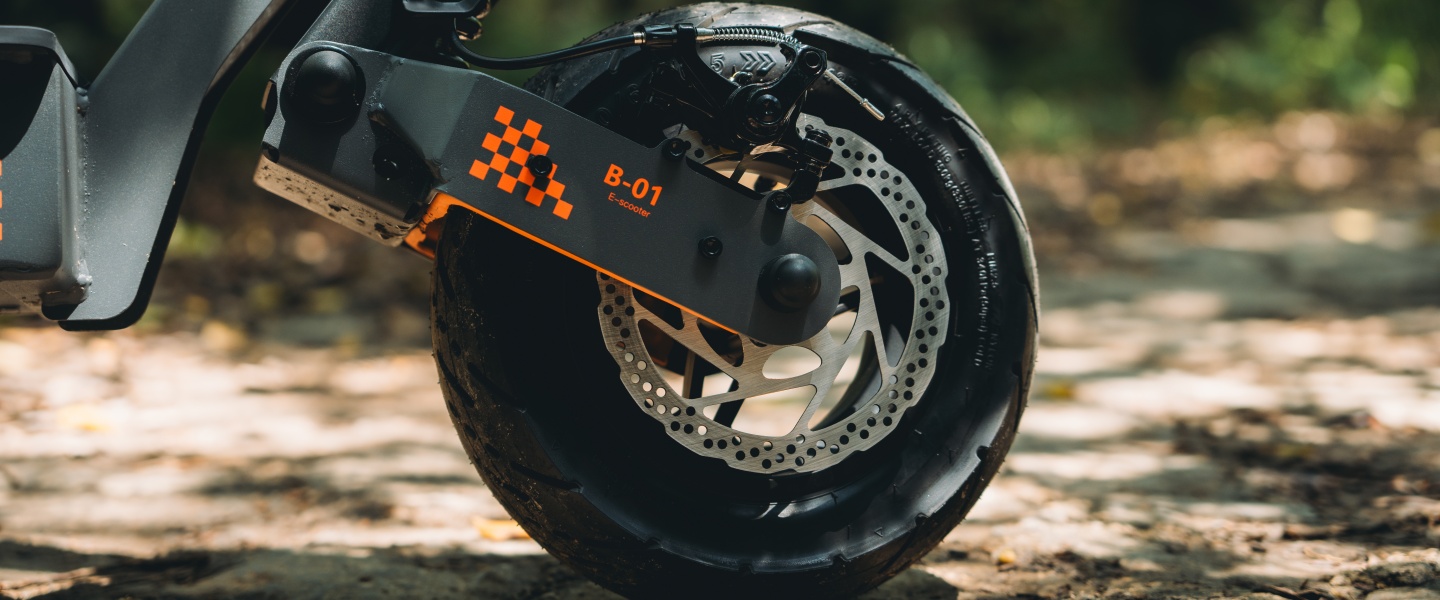
Hub Motors: The Most Common Choice
Most electric scooters available today use hub motors, where the motor is integrated into the centre of the front or rear wheel.
Hub motors offer several advantages:
- Quiet operation
- Compact design
- Fewer moving parts
- Lower maintenance requirements
- High reliability for everyday riding
Because there are no chains or belts, energy loss is reduced, making hub motors an efficient solution for city commuting.
What Affects Motor Performance?
Motor performance depends on more than just the wattage listed in the specifications.
Several factors work together to determine how a scooter performs.
Motor Power
Power is measured in watts (W). Generally, higher wattage provides stronger acceleration and improved climbing ability.
However, a higher power rating doesn't always mean a better riding experience. The best choice depends on where and how you ride.
Battery Voltage
A higher voltage battery allows the motor to deliver power more efficiently, particularly when accelerating or climbing hills.
Rider Weight
Heavier loads require more effort from the motor, which can reduce acceleration and overall range.
Terrain
Flat urban roads place less demand on the motor than steep hills or uneven off-road surfaces.
Tyre Pressure
Properly inflated tyres reduce rolling resistance, helping the motor operate more efficiently while improving battery performance.

Single Motor or Dual Motor?
Choosing between a single-motor and dual-motor scooter depends on your riding needs.
A single-motor scooter is often the ideal choice for everyday commuting, offering a balance of efficiency, simplicity, and affordability.
A dual-motor scooter delivers greater acceleration and stronger climbing performance, making it better suited for challenging terrain or riders seeking higher performance.
For example, riders commuting through city streets may find a model like the KuKirin G2 offers plenty of performance for daily travel, while more demanding routes may benefit from the additional power available in dual-motor scooters.

How to Keep Your Motor Running Efficiently
Looking after your motor doesn't require complicated maintenance, but a few simple habits can make a significant difference.
- Check tyre pressure regularly.
- Avoid carrying excessive weight.
- Clean dirt and debris from around the wheels.
- Avoid riding through deep water whenever possible.
- Inspect your scooter regularly for unusual noises or vibrations.
- Follow the manufacturer's recommended maintenance schedule.
Routine care not only improves performance but can also extend the lifespan of your scooter.
Conclusion
The motor is the heart of every electric scooter, converting electrical energy into smooth, efficient movement. By understanding how it works and what influences its performance, you'll be better equipped to choose a scooter that matches your daily riding needs.
Whether you're commuting to work, exploring the city, or enjoying weekend rides, selecting the right motor and maintaining it properly will help you enjoy a safer, smoother, and more reliable riding experience for years to come.
https://www.kukirinscooter-uk.com/
Lura